
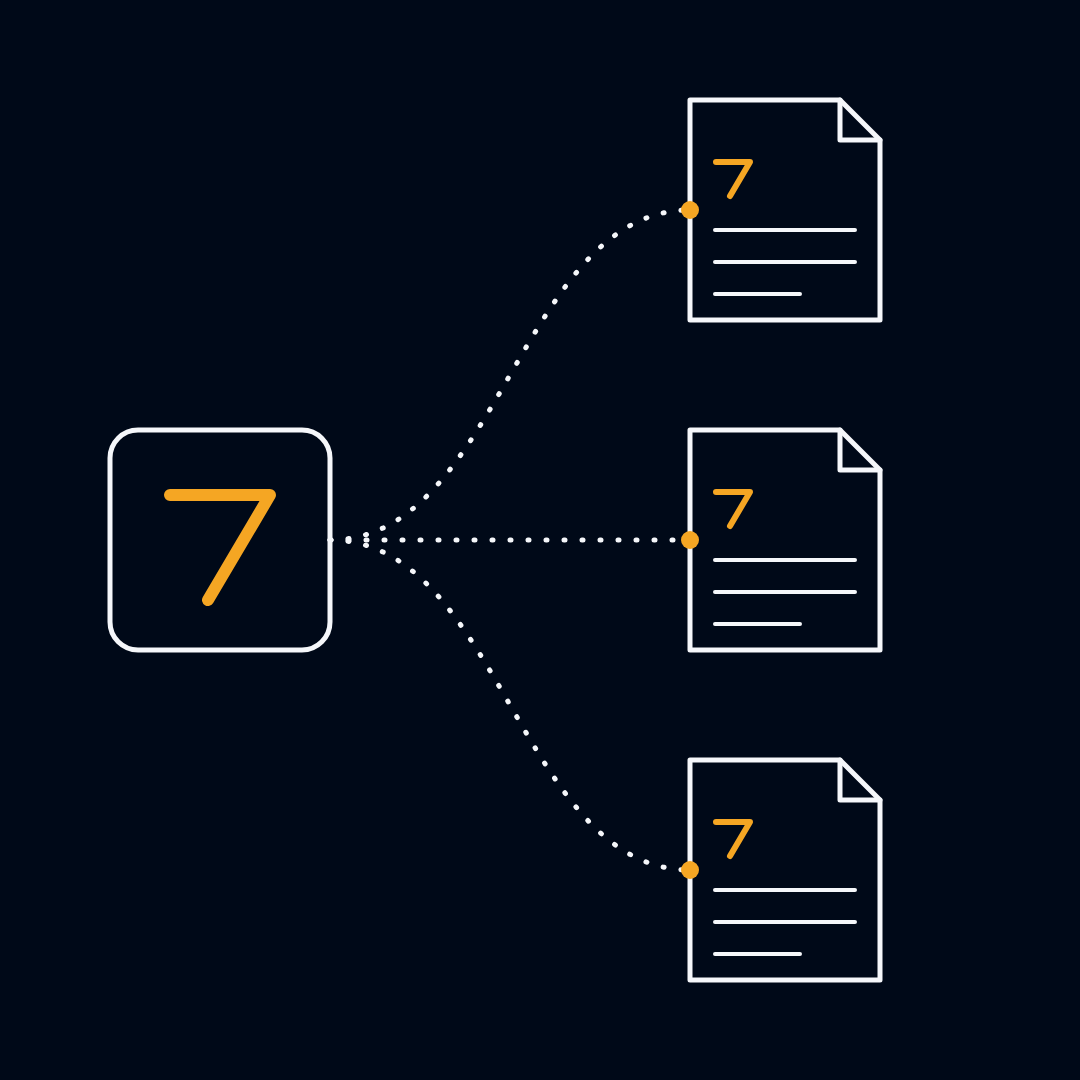
It's one of the most common things I find when I look at how a growing business actually runs day to day: the same piece of information, entered by hand, into more than one system.
A customer's details go into the CRM. Then into the invoicing tool. Then into a spreadsheet someone uses for reporting, because the CRM's built-in reports don't quite show what management actually wants to see. Nobody sat down and designed this on purpose. It happened gradually, one tool at a time, as the business grew and adopted new software without ever properly connecting it to the old software.
How it actually happens
This almost never starts as a decision. It starts as a workaround. Someone needed a report the CRM couldn't produce, so they built one in a spreadsheet. Someone needed invoicing to work a certain way, so they picked a separate tool for it. Each choice made sense on its own, at the time, for the problem in front of that person.
A year or two later, the business has four or five tools that were each the right answer to a narrow question, and none of them were chosen with the others in mind. The only thing connecting them is a person, manually retyping the same information into each one.
Where the real cost lives
The obvious cost is time — someone typing the same thing three times instead of once. That adds up, but it's usually not the biggest problem.
The bigger cost is errors. A number gets mistyped in one system and not the others, and now three sources of truth disagree with each other. Someone has to notice the disagreement, investigate which one is correct, and fix the other two. That's slow, it's frustrating, and over time it quietly erodes trust in the data itself. Once people stop trusting a system's numbers, they start double-checking everything manually anyway, which defeats a good part of the point of having the system.
There's also a scaling problem. Ten customers a month, entered three times each, is annoying but manageable. A hundred customers a month, entered three times each, starts requiring a dedicated person just to keep the systems roughly in sync.
What actually fixes this
This is usually solvable without a huge project. Most modern tools expose an API — a defined way for two systems to exchange data automatically. A relatively small, well-scoped integration can move data between systems as soon as it's entered once, so it appears correctly everywhere it needs to be, without a person retyping it.
The harder part isn't the technical work. It's noticing that this is happening in the first place, because the people doing the retyping have usually gotten used to it. It doesn't feel like a problem anymore. It just feels like the job.
A simple test
Ask your team, off the top of their head, where a piece of customer data lives and how many places it gets typed into by hand. If nobody can answer that quickly and confidently, that's worth a closer look — not because it's necessarily a crisis, but because it's the kind of cost that compounds quietly as the business grows, right up until it doesn't feel quiet anymore.